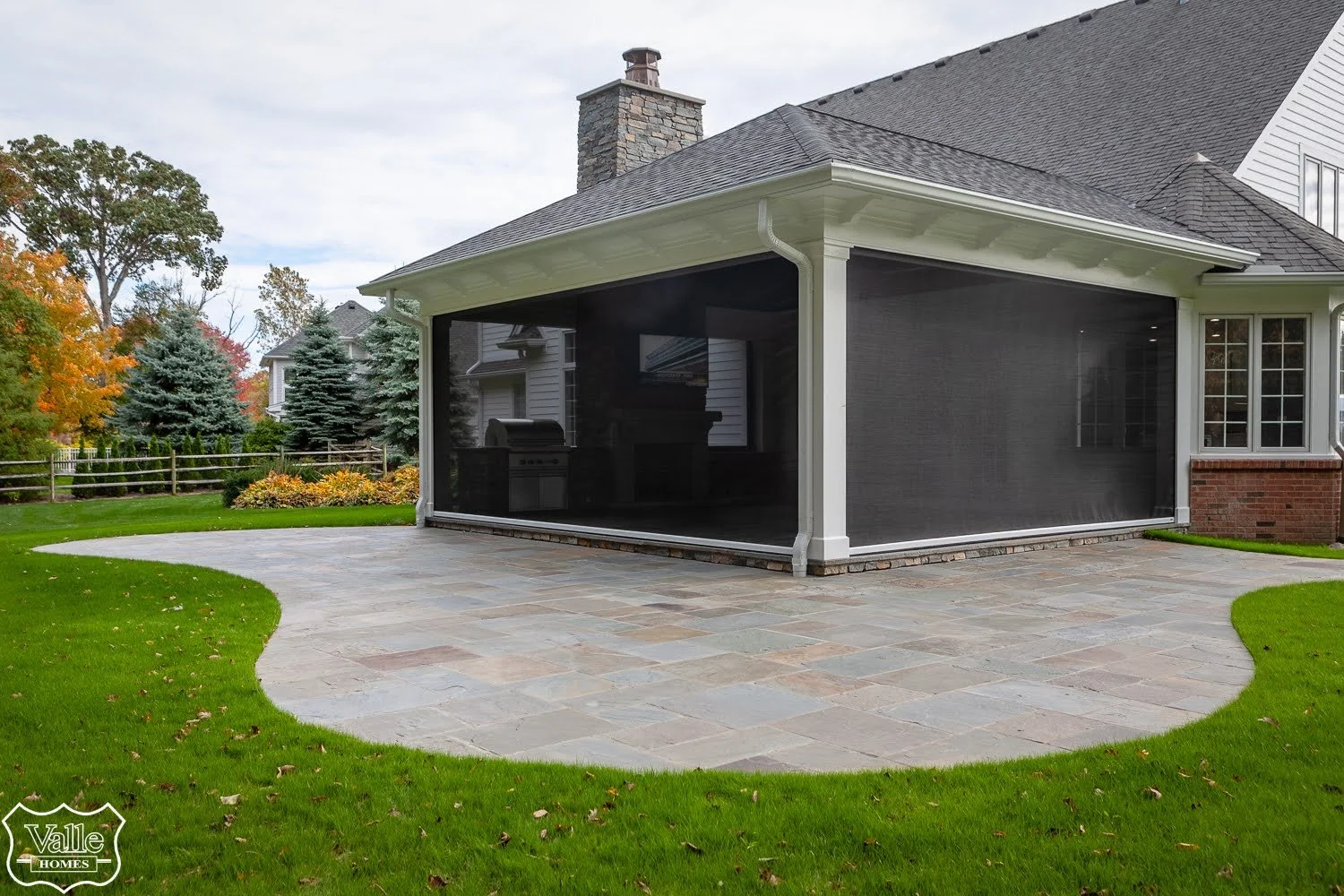
Monclova | Attached Covered Patio
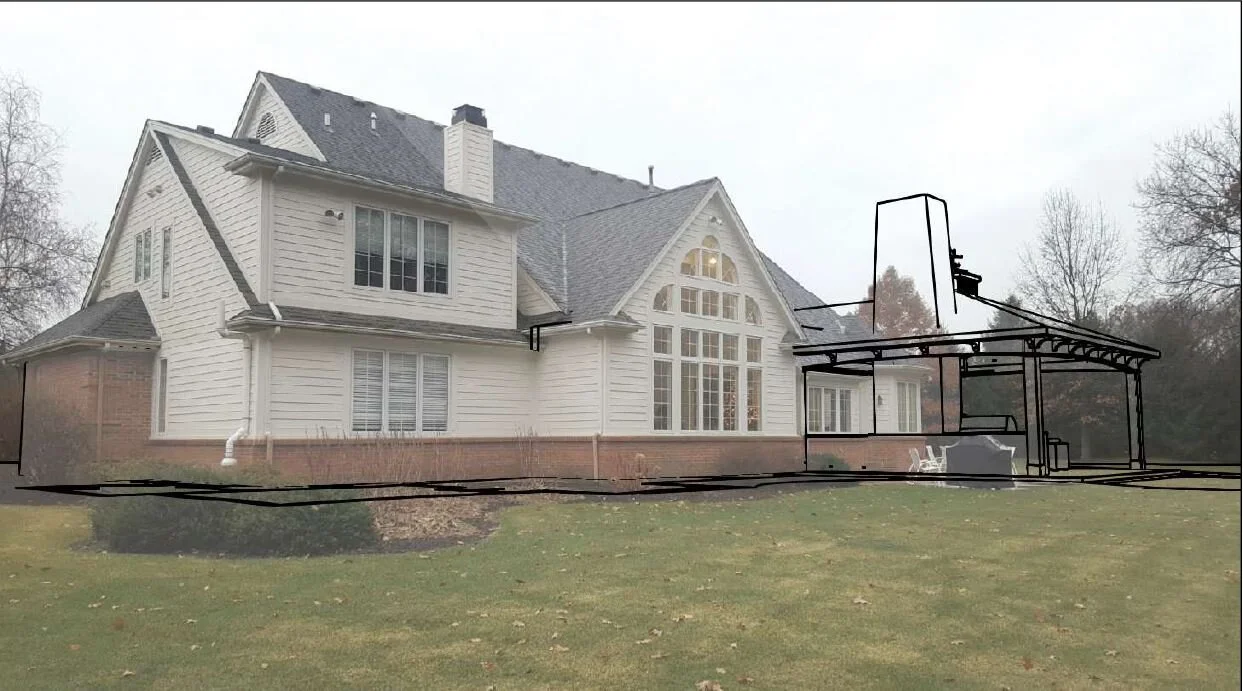
This space was designed to extend everyday living outdoors — not just as a patio cover, but as a true outdoor room. The structure sits just off the back of the home and feels like a natural continuation of the interior: same alignment, same proportions, and a sense of shelter that makes it usable from spring through fall.
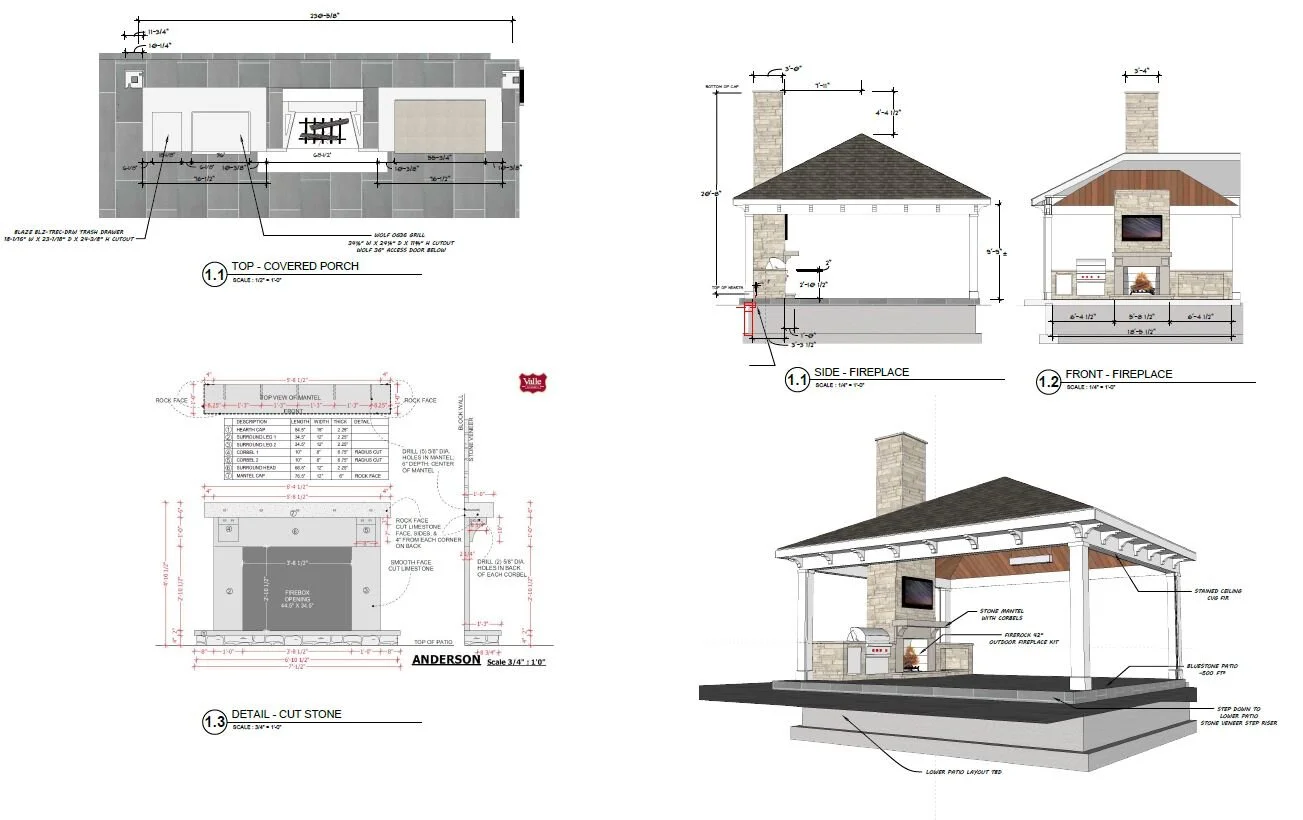
At just over 20 feet wide, the porch has enough space for dining, relaxing by the fire, and cooking — without feeling oversized or detached from the house. The floor level steps down to the lower patio, keeping sightlines open while naturally dividing the spaces.
Design coordination with Valle Homes.| Stonework by Billmaier Stoneworks.

Project Overview
Location: Monclova, Ohio
Client Objective: Create a covered outdoor living area fully integrated with cooking, heating, and year-round usability
Structure Type: Attached covered patio
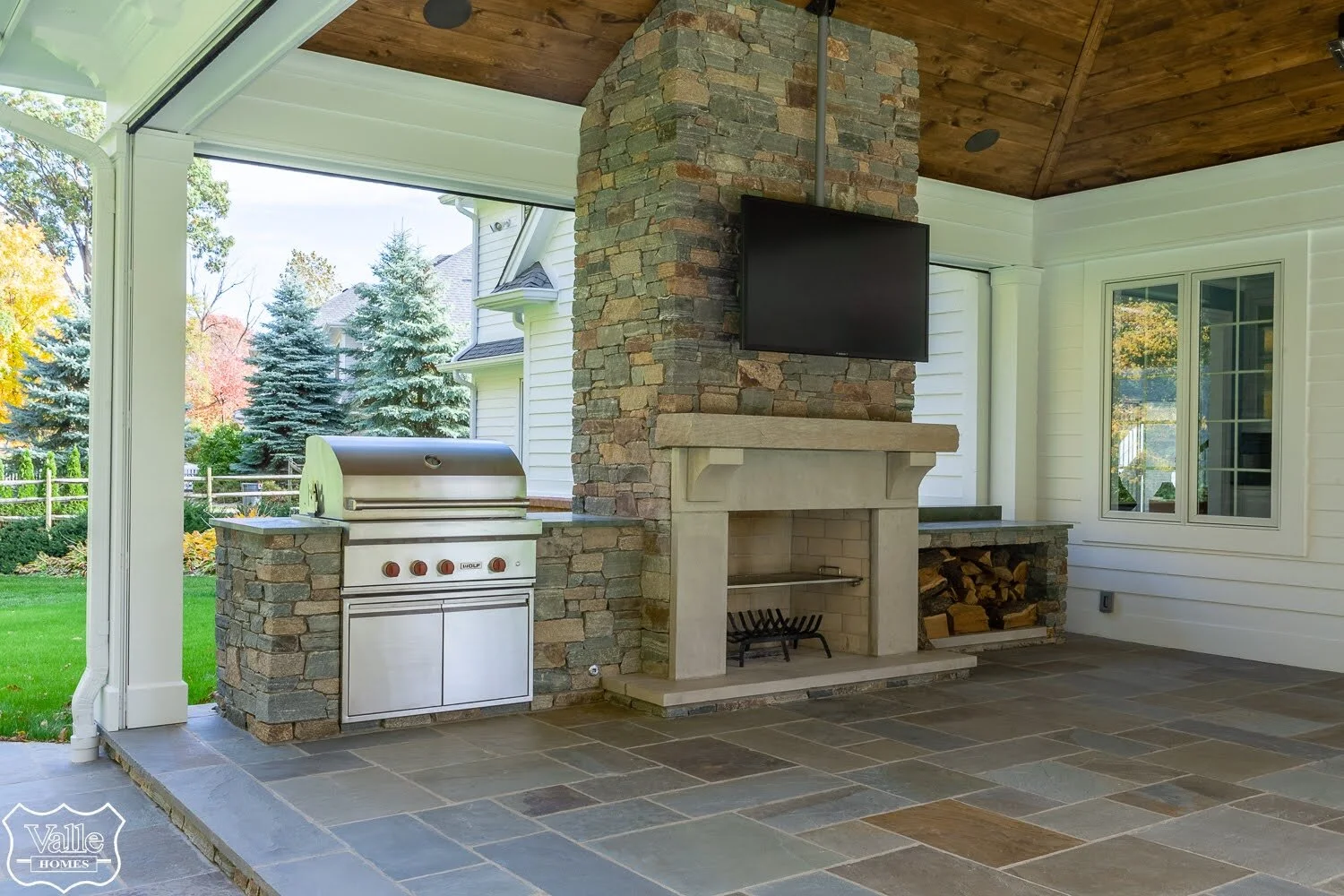
Primary Features: Roof tie-in, outdoor kitchen, fireplace, Phantom retractable screens, infrared heaters, expanded patio
Role: Site layout, structural coordination, utility planning, and construction management
This project expanded the rear of the home into a fully functioning outdoor living room. The structure was designed to integrate directly with the home while incorporating cooking, heating, and weather protection systems within one coordinated build.
Design Strategy
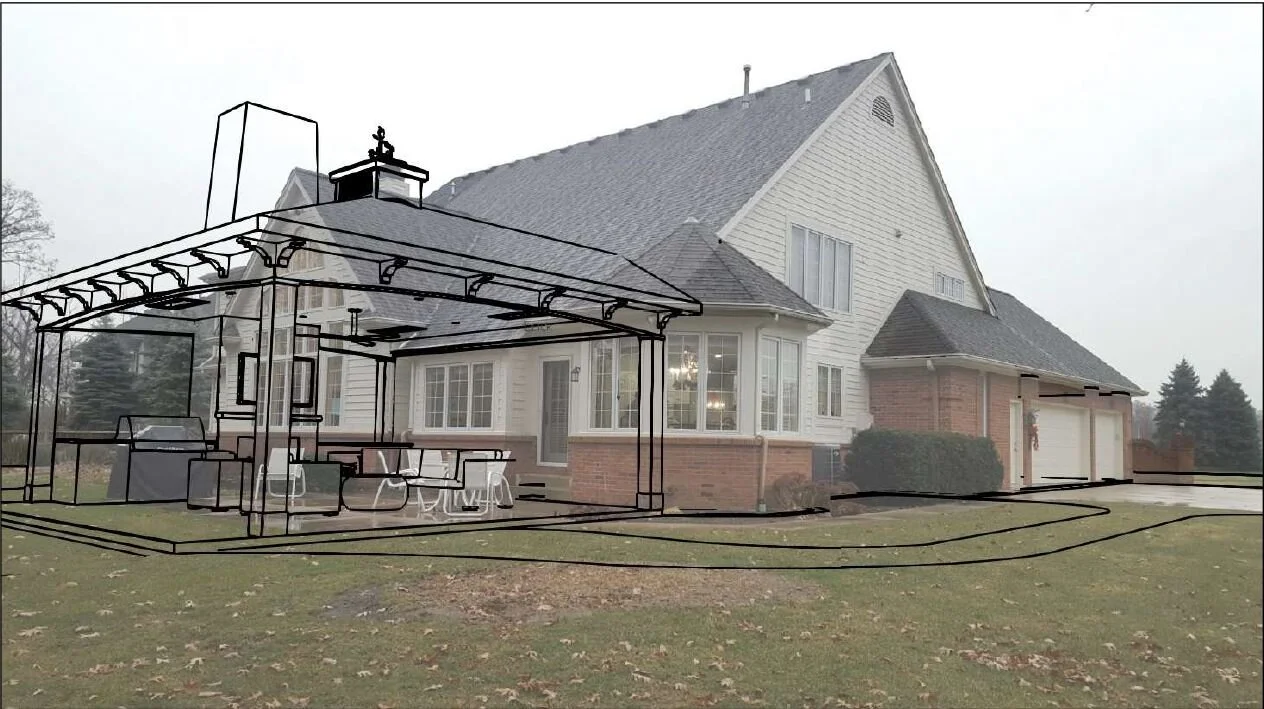
The covered patio was aligned with the home’s existing roof geometry to appear original to the structure. Column placement and beam spacing were coordinated around the outdoor kitchen layout and fireplace massing to maintain balanced proportions and uninterrupted circulation.
The outdoor kitchen was positioned to maintain clear sightlines to the yard while allowing proper ventilation and utility routing. Gas, electric, and exhaust requirements were planned during layout to prevent retrofits.
Phantom retractable screens were integrated within the framing system to provide seasonal enclosure without altering the architectural lines. Infrared heaters were mounted within the ceiling plane and aligned with seating zones to extend usability into cooler months.
Drainage patterns, downspout routing, and patio elevations were resolved prior to construction to ensure long-term performance.
Construction Coordination
Roof tie-in required careful flashing, waterproofing, and structural load alignment with the existing home. Foundation footings were sequenced alongside patio expansion to maintain consistent elevations.
Electrical runs for recessed lighting, heaters, and screen motors were concealed within framing cavities during rough-in. Gas lines for the grill and fireplace were coordinated with kitchen cabinetry and stonework before finish installation.
The fireplace structure and outdoor kitchen were built as integrated masonry elements tied into the surrounding hardscape, creating one cohesive outdoor environment.
Close coordination between framing, masonry, mechanical, and finish trades ensured the structure, kitchen, heating systems, and screens function together as a unified space.



Final Result
The completed covered patio functions as a true outdoor living room. Cooking, fire, shade, and seasonal enclosure are integrated within one architectural extension of the home.
With retractable screens and ceiling-mounted infrared heat, the space remains usable across multiple seasons while maintaining clean architectural lines and material continuity.
The result is a durable, fully integrated outdoor environment designed for performance as much as appearance.